30 Dreamy Coastal Kitchen Ideas to Inspire You
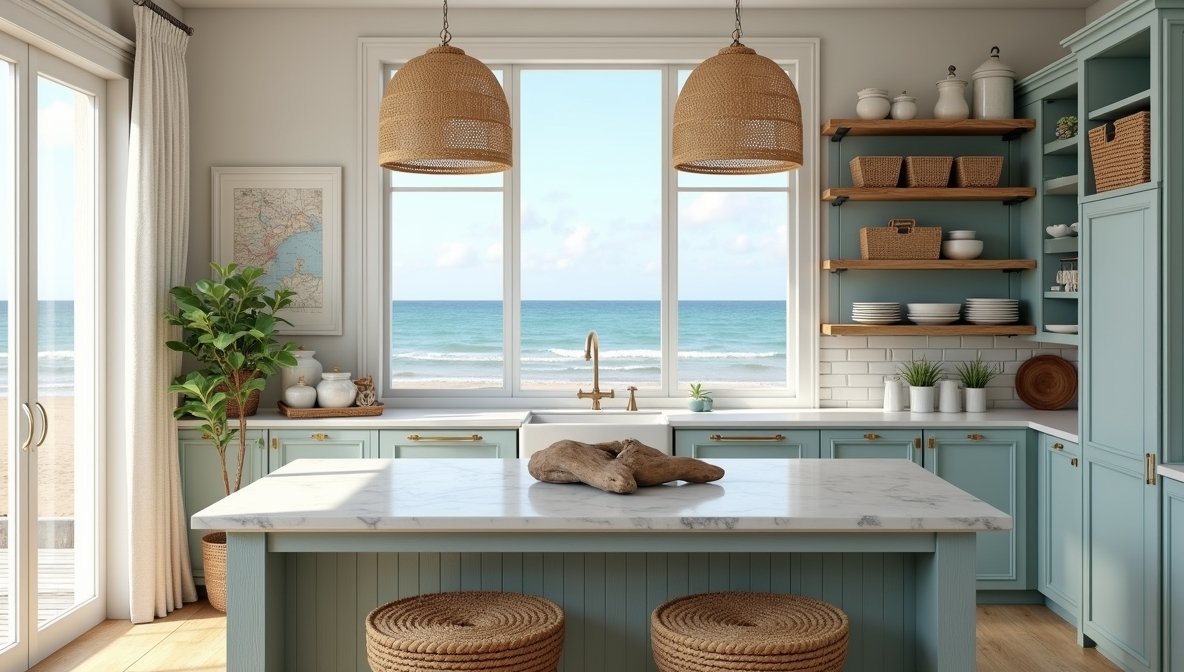
Ah, the allure of a coastal kitchen! Imagine sunlit mornings with the scent of saltwater lingering in the air, weathered wood under your fingertips, and a palette that mirrors the ocean’s serenity. Whether you’re a seaside dweller or a landlocked dreamer, these ideas will transform your kitchen into a breezy, nautical haven. Let’s dive into the heart of coastal design and uncover what makes these spaces so irresistibly inviting.
Introduction & Core Coastal Design Elements
1.1 What Defines a Coastal Kitchen?
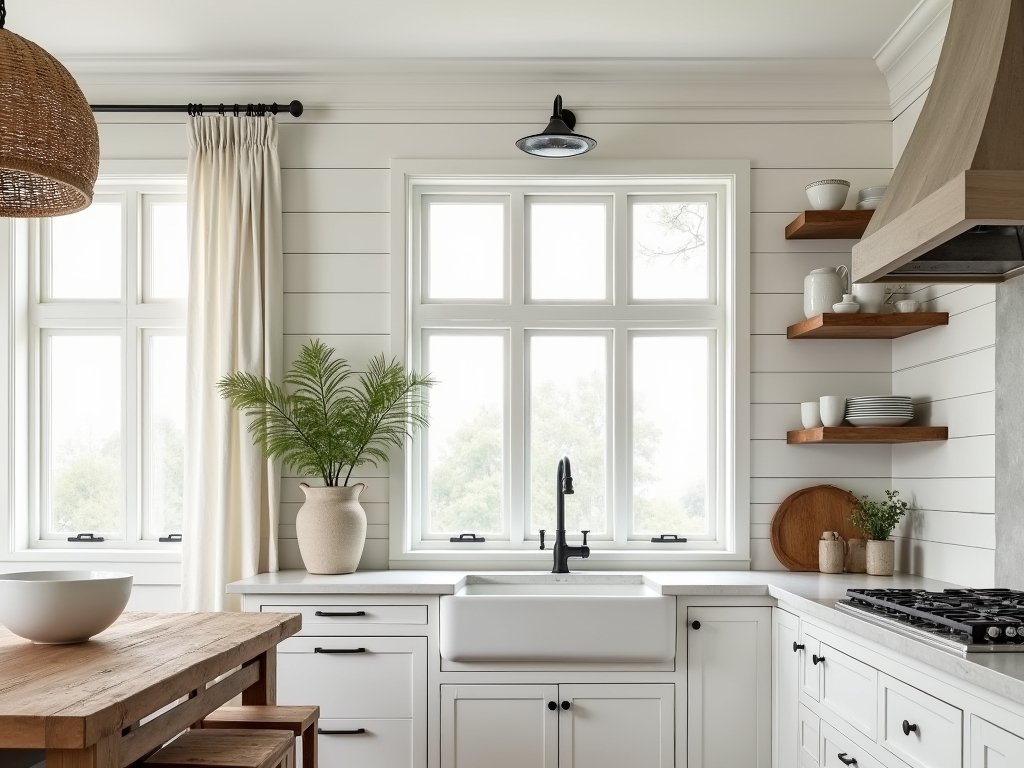
Picture this: light floods through oversized windows, airy layouts blur the lines between indoors and out, and textures like driftwood or woven rattan whisper of beachside relaxation. Coastal kitchens aren’t just about seashells and anchors—though a few tasteful nods won’t hurt! Instead, they balance natural materials with a soothing color scheme to create spaces that feel both fresh and timeless.
What’s the secret sauce? First, neutral backdrops—think crisp whites or soft sandy hues—act as a canvas. Then, layered textures add depth: think shiplap walls, linen curtains, or a rope-wrapped pendant light. Finally, subtle nautical accents, like a framed vintage map or ceramic jars shaped like coral, tie the theme together without feeling kitschy. Whether you lean toward Hamptons chic or rustic beach cottage, the goal is simplicity with soul.
1.2 Coastal Color Palettes
1.2.1 Soft Blues & Aquas
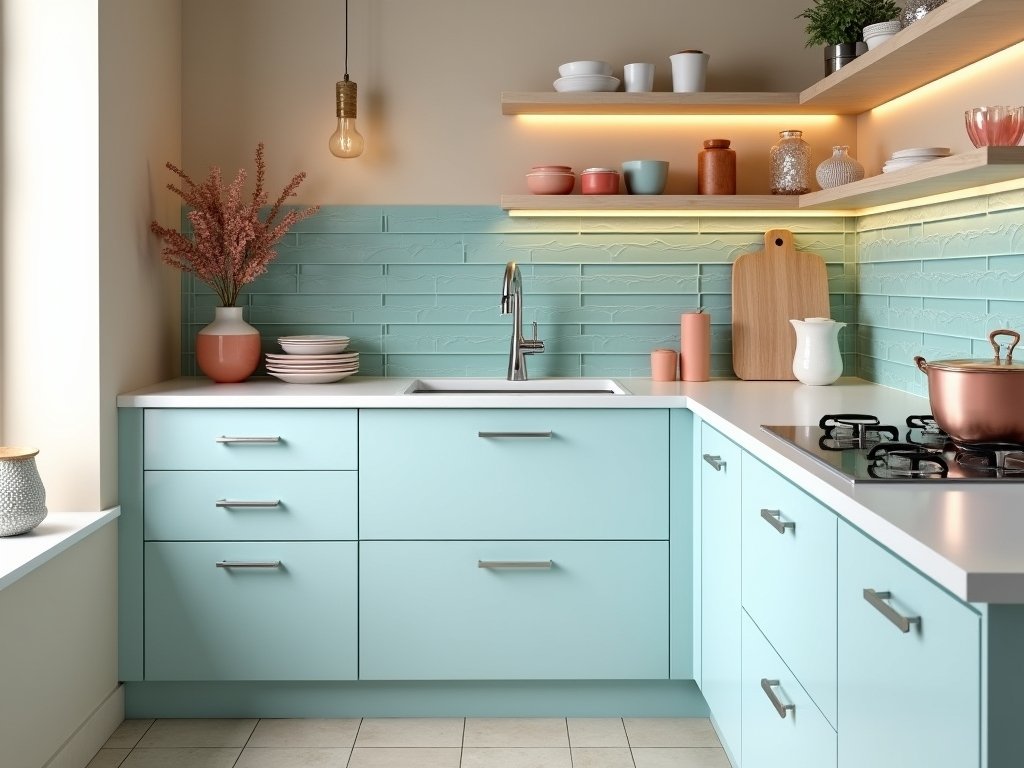
Soft blues and aquas are the heartbeat of coastal kitchens, evoking calm waves and cloudless skies. For a serene vibe, pair pale blue cabinets with white quartz countertops. Alternatively, go bold with an aqua-tiled backsplash that pops against sandy beige walls. Pro tip: Balance vibrant hues with plenty of white to keep the space from feeling overwhelming.
1.2.2 Sandy Neutrals & Whites
Sandy neutrals—think warm taupes, creamy ivories, and soft greiges—are the ultimate foundation. These shades mimic sun-bleached shores and pair beautifully with natural wood finishes. For a crisp look, try all-white cabinets accented with brass hardware. Not too stark, not too bland—just right.
1.2.3 Seafoam Greens
Less common but equally enchanting, seafoam green adds a touch of whimsy. Use it on lower cabinets or open shelving to channel tropical lagoons. Pair it with rattan bar stools and terracotta pots for an earthy contrast.
1.2.4 Crisp Navy Accents
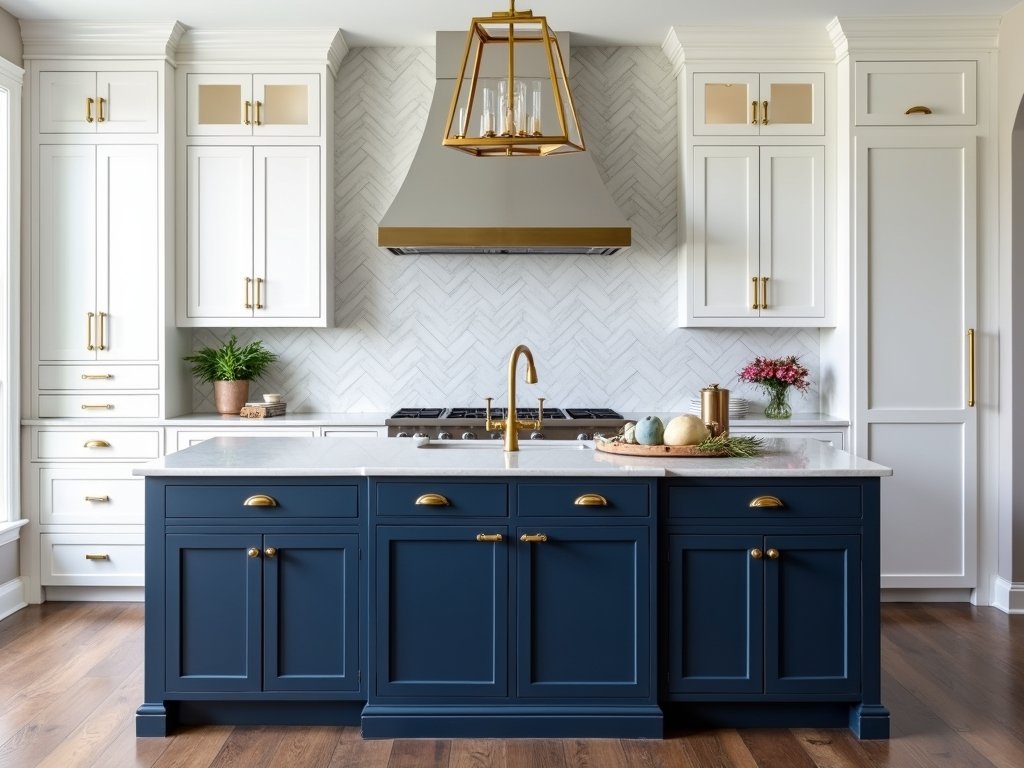
Want drama without the dark side? Navy blue accents—like an island base or ceramic tile—add sophistication. Pair it with white shaker cabinets and gold fixtures for a modern maritime vibe.
1.2.5 Monochromatic Beachy Tones
Stick to one hue but play with shades. A monochromatic scheme—say, varying tones of blue from ceiling to floor—creates harmony. Add visual interest with textures like a limestone backsplash or a jute rug.
1.2.6 Pairing Colors for Balance
Mixing coastal colors? Follow the 60-30-10 rule: 60% neutrals, 30% primary color (like blue), and 10% accent (like coral). For example, white walls (60%), seafoam cabinets (30%), and navy dishware (10%). Need inspiration? Check out this guide to coastal color schemes for foolproof combinations.
Materials & Textures for a Coastal Vibe
2.1 Natural Wood Finishes
2.1.1 Weathered Wood Cabinets
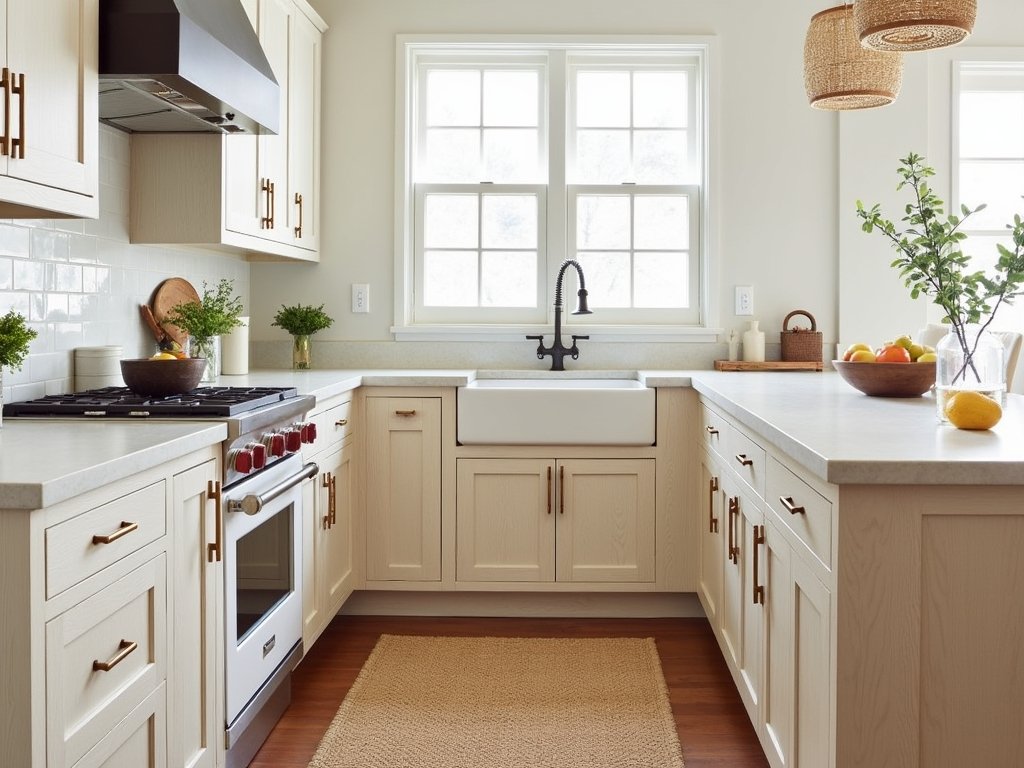
Ah, weathered wood—nature’s way of adding instant character! Imagine cabinets with a sun-kissed, bleached finish that whispers of lazy days by the shore. This material isn’t just about looks; it’s durable enough to handle sandy toes and spilled smoothies. For a cohesive vibe, pair these cabinets with brass hardware or matte black pulls. Pro tip: If new cabinets aren’t in the budget, try distressing existing ones with chalk paint and a light sanding. Voilà—rustic charm on a dime!
Meanwhile, don’t shy away from mixing wood tones. Light oak upper cabinets paired with weathered gray lowers create depth without chaos. And hey, if you’re worried about maintenance? A clear sealant keeps that beachy patina intact for years.
2.1.2 Reclaimed Wood Countertops
Reclaimed wood countertops are the unsung heroes of coastal kitchens. Not only do they tell a story (think old barns or driftwood), but they also add warmth to crisp white palettes. For instance, a chunky live-edge slab becomes a focal point when paired with sleek stainless steel appliances.
But wait—there’s more! Reclaimed wood is a poster child for sustainable design. By repurposing materials, you’re reducing waste while keeping your kitchen eco-chic. Worried about water damage? A food-safe epoxy coating seals the deal, making these countertops as practical as they are pretty. Dive deeper into eco-friendly kitchen materials for guilt-free inspiration.
2.2 Stone & Marble Surfaces
2.2.1 Quartz with Veining
If you crave the look of marble but need something tougher, quartz with veining is your soulmate. Its subtle streaks mimic ocean currents, while its non-porous surface laughs in the face of coffee spills and tomato sauce. Perfect for busy households, quartz pairs beautifully with shiplap walls or navy blue islands.
For a cohesive look, extend the same quartz to your backsplash. Thin, elongated tiles in a herringbone pattern? Chef’s kiss! And let’s not forget—quartz requires zero sealing, so you’ll spend less time scrubbing and more time sipping iced tea by the window.
2.2.2 Limestone Backsplashes
Limestone backsplashes bring the beach indoors with their soft, organic texture. Imagine creamy tiles flecked with fossil-like details—a subtle nod to coastal history. Unlike glossy subway tiles, limestone’s matte finish keeps the vibe relaxed and unfussy.
Pair it with open shelving displaying ceramic bowls or woven bread baskets for a lived-in feel. Just remember: Limestone is porous, so seal it annually to ward off stains. Still, a little upkeep is a small price to pay for that organic elegance, right?
2.3 Woven & Textured Accents
2.3.1 Rattan Bar Stools
Nothing says coastal charm like a set of rattan bar stools. Their lightweight frames and airy weave invite casual gatherings, whether it’s breakfast with the family or sunset cocktails with friends. Opt for neutral tones to blend seamlessly with sandy hues, or go bold with navy cushions for a pop of color.
Pro tip: If rattan feels too “beach house,” try blending it with industrial elements—like metal legs or concrete floors—for a modern twist. Either way, these stools are as comfy as they are chic!
2.3.2 Jute Rugs
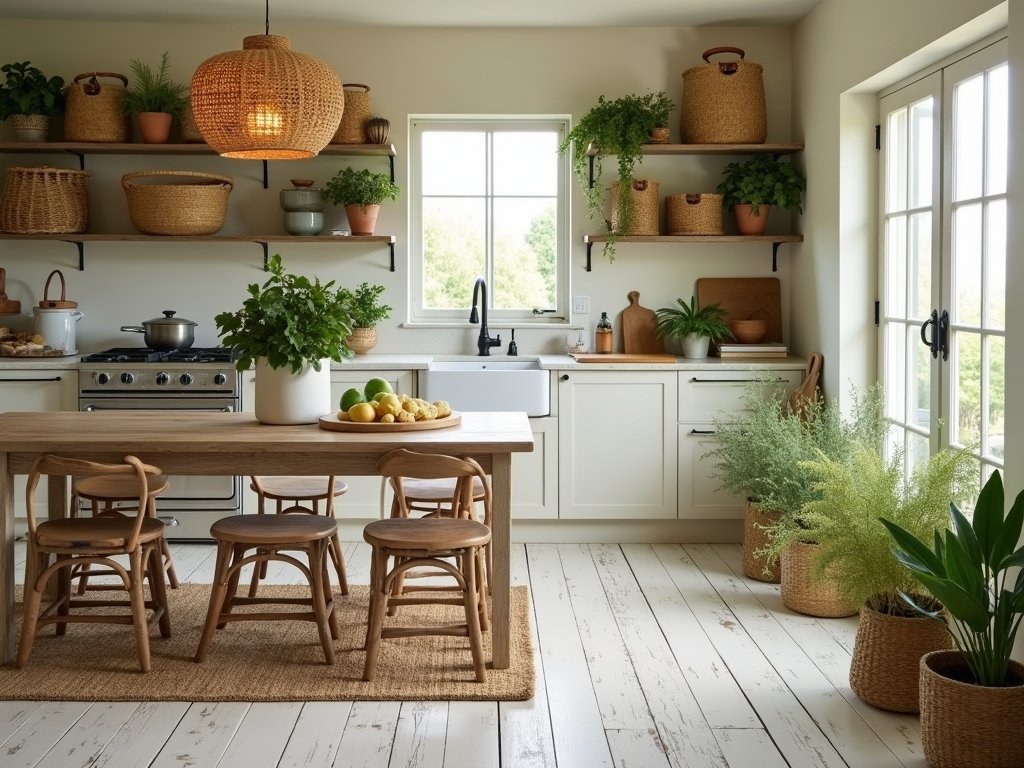
Jute rugs are the barefoot-luxury staple every coastal kitchen needs. Their nubby texture adds warmth underfoot, while their earthy tones ground brighter color schemes. Place one under a farmhouse table or in front of the sink for instant coziness.
But here’s the catch: Jute and water don’t mix. Keep these rugs in low-moisture zones, or layer them over waterproof vinyl flooring. For a splash of pattern, try a jute blend with geometric stripes—subtle enough to avoid clashing with busier elements.
2.3.3 Rope Cabinet Hardware
Why settle for ordinary knobs when rope cabinet hardware can steal the show? These quirky pulls add a playful, nautical touch without going overboard. Pair them with white shaker cabinets for a crisp contrast, or let them shine against distressed wood.
Best part? They’re a DIY dream. Grab some marine-grade rope, cut it to size, and secure it with sturdy knots. Easy-peasy!
Nautical Decor & Functional Design
3.1 Nautical-Themed Decor
3.1.1 Driftwood Artwork
Let’s face it—driftwood is the ultimate coastal storyteller. A gnarled branch mounted above the stove or a minimalist sculpture on the countertop adds organic texture and a dash of beachcomber charm. For a DIY project, scour local shores for weathered pieces (just check regulations first!), then sand and seal them for a polished finish. Pair with linen curtains and a jute rug to let the wood’s raw beauty shine. Pro tip: Smaller driftwood accents, like utensil holders or framed wall art, keep the look cohesive without overwhelming the space.
3.1.2 Rope Chandeliers
Why settle for basic lighting when a rope chandelier can anchor your kitchen’s nautical theme? These fixtures blend rustic warmth with maritime flair, casting soft shadows that mimic dappled sunlight on water. Go bold with a oversized piece above the island or opt for mini pendants over a breakfast nook. For a modern twist, pair rope with sleek Edison bulbs or brass accents. Worried about dust? A quick swipe with a microfiber cloth keeps it looking shipshape!
3.1.3 Seashell Displays
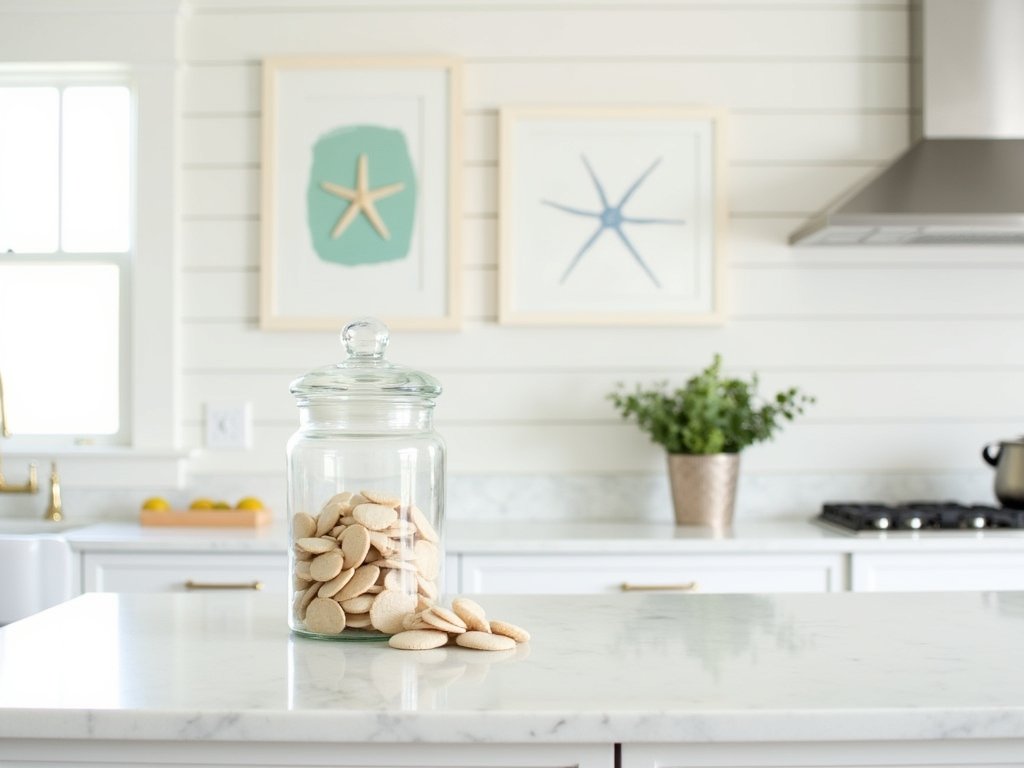
Seashells are coastal classics, but there’s an art to using them without veering into tacky territory. Instead of cluttering shelves, try a curated approach: fill a glass apothecary jar with sand dollars, line a windowsill with conch shells, or press tiny starfish into a shadowbox frame. For a functional twist, use large shells as soap dishes or tea light holders. Stick to neutral tones—ivory, taupe, or gray—to maintain that effortless beach vibe.
3.1.4 Vintage Maritime Maps
Channel your inner explorer with vintage maritime maps framed above the sink or as a backsplash focal point. Aged parchment textures and faded ink hues add nostalgia, while routes of old trade winds spark conversation. For a subtle nod, use map-inspired wallpaper in a pantry or line drawer bottoms with nautical chart prints. Pair with brass compasses or a model ship on open shelving to complete the theme. Just remember: Less is more. One statement map beats a cluttered gallery wall!
3.2 Functional Coastal Storage
3.2.1 Open Shelving with Wicker Baskets
Open shelving isn’t just trendy—it’s a coastal kitchen staple. Display stacks of stoneware bowls or glass mason jars, then tuck clutter into wicker baskets for a tidy yet relaxed look. Opt for floating shelves in natural wood or whitewashed finishes to keep the space airy. Label baskets with seashell-shaped tags or hemp twine for a playful touch. Bonus: Open shelves make everyday items accessible, so you’re not digging through cabinets mid-recipe!
3.2.2 Glass-Front Cabinets
Love the idea of open shelving but hate dusting? Glass-front cabinets offer the best of both worlds. Showcase heirloom dishes, vintage glassware, or collections of sea-blue pottery while keeping them protected. For a cohesive look, paint the cabinet interiors in soft blues or greens—a surprise pop of color when the doors swing open. Add LED strip lighting inside to turn your displays into after-dark ambiance.
3.2.3 Built-In Breakfast Nooks
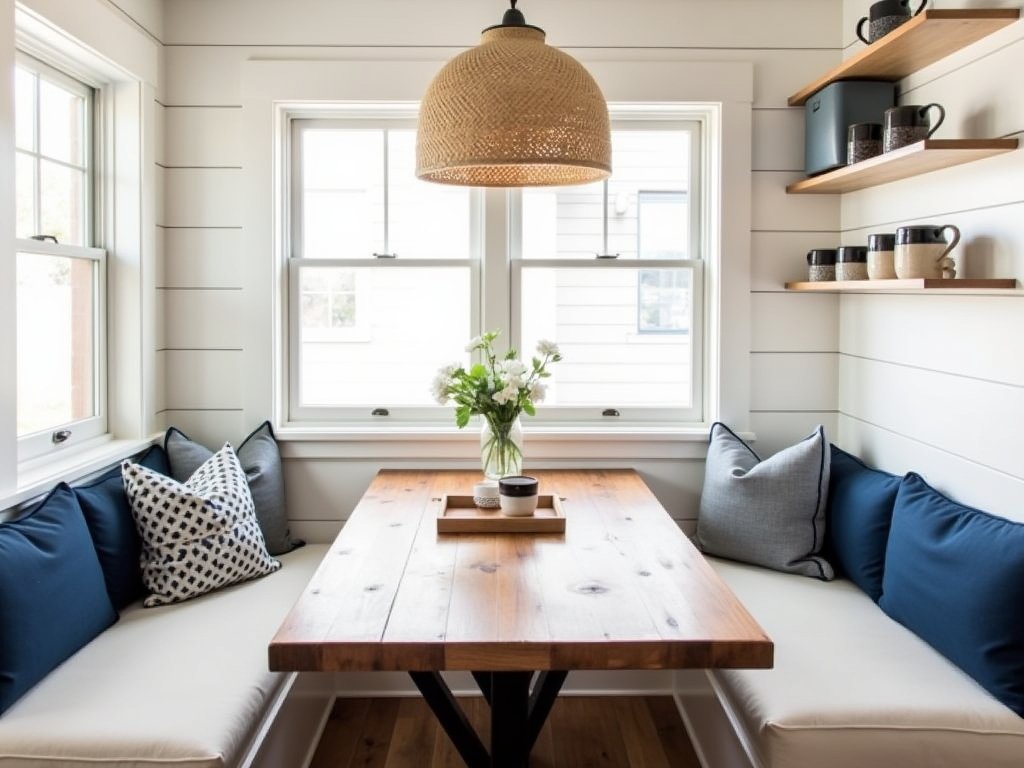
A built-in breakfast nook wrapped in shiplap is the heart of a coastal kitchen. Cushion the bench with weather-resistant fabric in stripes or oceanic hues, and top with throw pillows in linen or canvas. Under-seat drawers or lift-up lids offer hidden storage for table linens or board games. Pair with a reclaimed wood table and a rattan pendant light for a space that’s equal parts cozy and chic. Pro tip: Opt for moisture-resistant cushions if your kitchen opens to a patio or pool area.
3.2.4 Under-Counter Storage
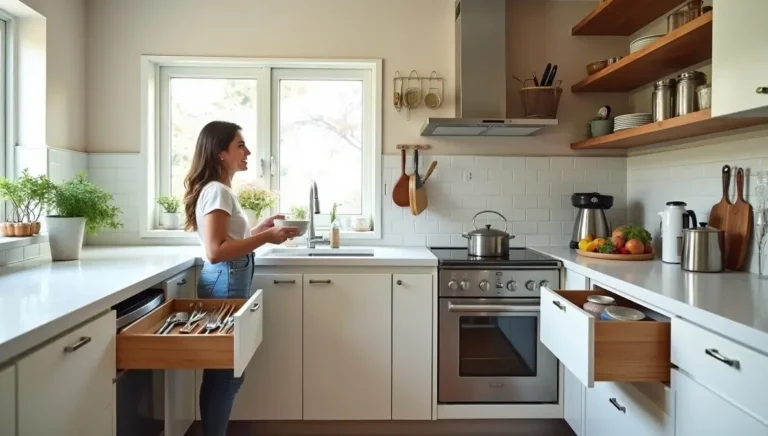
Maximize every inch with under-counter pull-out drawers or sliding shelves. Store pots, pans, or even a hidden pet feeding station (yes, really!). For a coastal twist, line drawers with removable peel-and-stick wallpaper featuring coral or wave patterns. Alternatively, install a vertical slot for baking sheets and cutting boards—styled with rope handles for a nautical touch. Not sure where to start? Check out this guide to best flooring for coastal climates to ensure your storage solutions pair with durable, water-friendly floors.
Lighting & Layout
4.1 Coastal Lighting Idea
4.1.1 Wicker Pendant Lights
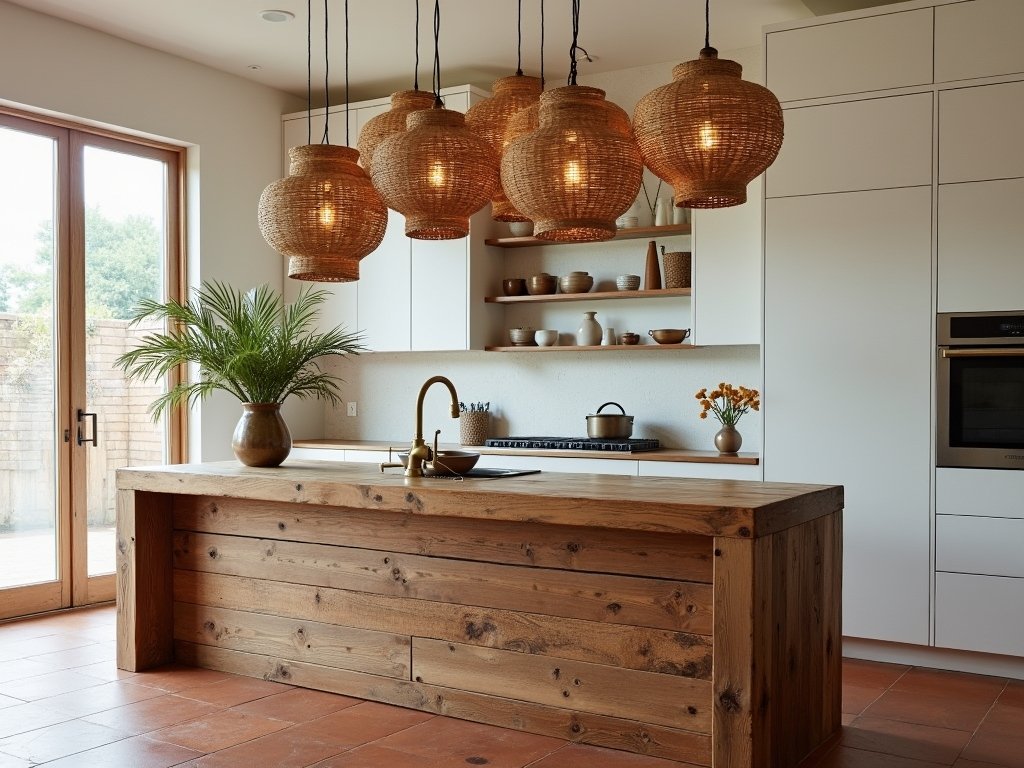
Let’s be real—wicker pendant lights are the crown jewels of coastal kitchens. Their woven texture casts playful shadows, turning even a simple island into a sun-dappled sanctuary. Hang them low over a breakfast bar for intimate vibes, or cluster three at varying heights above a farmhouse table. For a budget-friendly hack, thrift vintage baskets and retrofit them with LED bulbs. Pair with brass hardware or matte black chains to mix earthy and industrial vibes. Pro tip: Dust them monthly with a soft brush to keep cobwebs (and that beach cottage charm) at bay!
4.1.2 Recessed Lighting for Airiness
Want your kitchen to feel like it’s floating on a cloud? Recessed lighting is your secret weapon. These subtle fixtures vanish into the ceiling, bathing the room in a soft, even glow that mimics natural light. Place them strategically over workspaces like countertops and sinks, then layer with pendant lights for drama. Opt for dimmable options to switch from crisp morning brightness to cozy sunset hues. And here’s the kicker: They’re energy-efficient, cutting down on bills while keeping your space bright and breezy.
4.1.3 Brass Lantern Fixtures
Brass lanterns strike the perfect balance between nautical nostalgia and modern flair. Imagine their warm gleam bouncing off shiplap walls or a limestone backsplash. Go bold with oversized lanterns flanking a window, or keep it subtle with mini versions above a coffee station. To prevent tarnishing in salty coastal air, wipe them down with a vinegar-water mix every few weeks. Trust us—they’ll age like a fine seashell, gaining character without losing their shine.
4.1.4 Natural Light Maximization
Why fight the sun when you can invite it in? Swap heavy drapes for sheer linen curtains that filter light like a morning tide. Install a skylight above the sink for a sunlit dishwashing view (yes, it’s possible to enjoy chores!). Mirror-backed open shelves or a glossy subway tile backsplash will bounce light around like sparkles on waves. And don’t forget to trim back outdoor foliage—those palm fronds might look pretty, but they’re no match for a kitchen craving vitamin D!
4.2 Open-Concept Layouts
4.2.1 Island Designs with Bar Seating
An oversized island isn’t just a workspace—it’s the heart of your coastal kitchen. Opt for a waterfall edge in veined quartz to mimic rolling waves, or go rustic with a reclaimed wood top. Add bar stools in rattan or weathered oak for casual meals or homework sessions. Below deck, incorporate deep drawers for pots and pans, or open shelving for woven baskets of veggies. Pro tip: Paint the island base a contrasting navy or seafoam green to anchor the space without weighing it down.
4.2.2 Seamless Indoor-Outdoor Flow
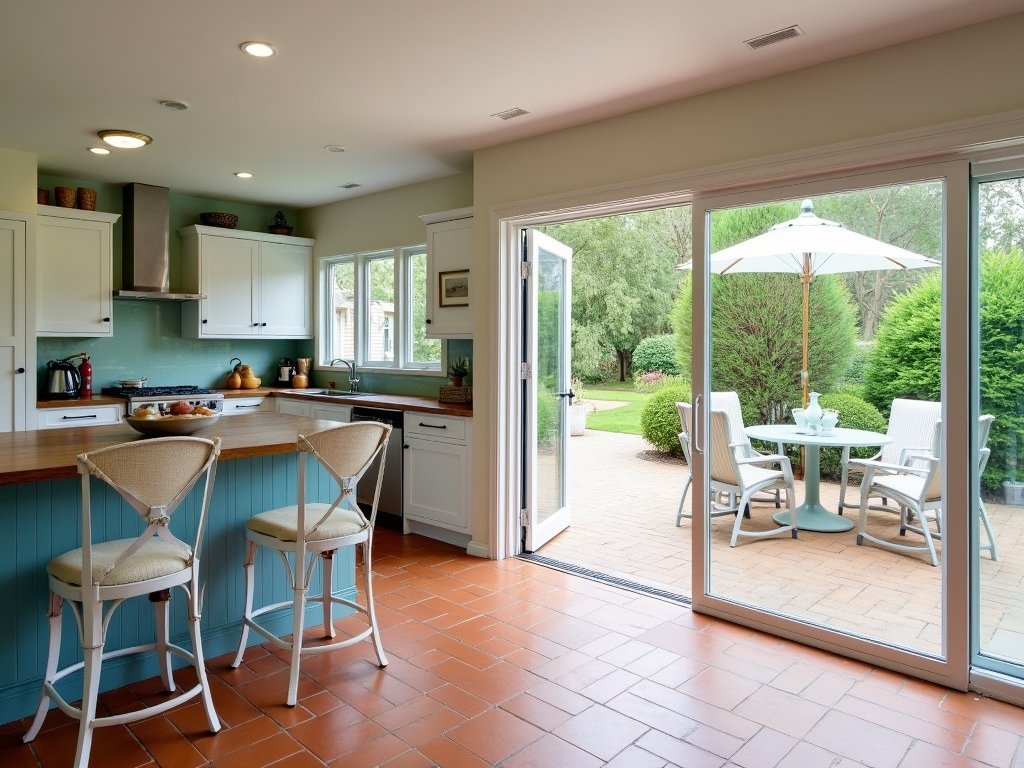
Blur the lines between your kitchen and the great outdoors with sliding glass doors or a retractable wall. Continue your flooring material—like terracotta tiles or whitewashed hardwood—from the kitchen to the patio for visual continuity. Add a built-in grill station or a countertop herb garden just outside the door. For breezy meals, opt for weather-resistant furniture like teak tables or aluminum chairs with sunbrella cushions. And let’s not forget lighting: String Edison bulbs overhead or tuck solar-powered lanterns into potted plants. Craving more tips? This guide to best flooring for coastal climates ensures your indoor-outdoor flow stays flawless, rain or shine.
Flooring, Sustainability & FAQs
5.1 Coastal Flooring Options
5.1.1 Whitewashed Hardwood
Whitewashed hardwood floors are the holy grail of coastal kitchens—light, airy, and effortlessly chic. Imagine planks kissed by the sun, their grain peeking through a milky finish that pairs perfectly with navy accents or rattan furniture. Not only do they brighten the room, but they’re also a breeze to maintain. Spilled smoothie? A quick wipe does the trick. For extra durability, opt for engineered hardwood with a moisture-resistant core—ideal for homes near the shore. Pair with a jute rug under the dining table to soften footsteps and add texture. Pro tip: Avoid high-gloss finishes; a matte or satin sheen keeps the look relaxed and beachy.
5.1.2 Terracotta Tiles
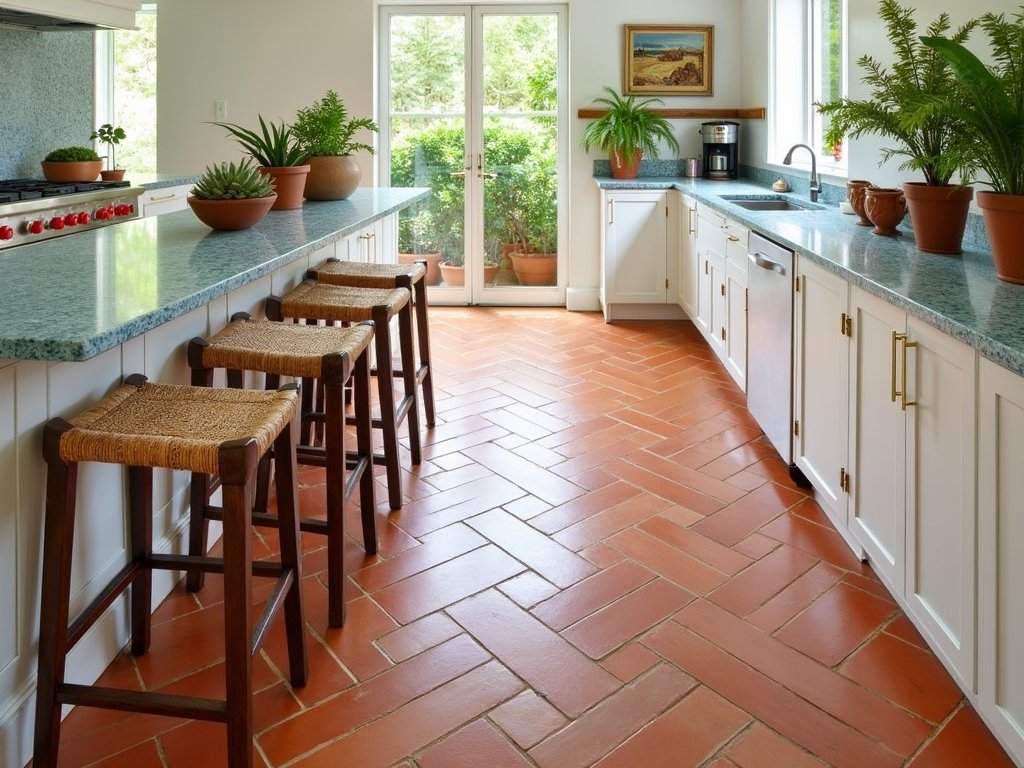
Craving warmth underfoot? Terracotta tiles bring Mediterranean vibes to your coastal kitchen. Their earthy red tones echo sunbaked cliffs, while their natural porosity helps regulate temperature—cool in summer, cozy in winter. Arrange them in a herringbone pattern for visual intrigue, or stick to classic squares for a timeless feel. Seal them annually to prevent stains from sandy footprints or rogue olive oil splatters. Pair with woven bar stools and potted succulents for a laid-back, global-inspired aesthetic. Bonus: Terracotta’s imperfections (think slight cracks or color variations) only add to its charm—no two tiles are alike!
5.1.3 Patterned Cement Tiles
For a playful twist, patterned cement tiles steal the show. Think azure waves, coral motifs, or geometric designs that nod to the sea without shouting “theme park.” These tiles are tough as nails, resisting scratches and humidity like a pro. Use them as a bold kitchen runner or a backsplash-to-floor feature wall. Keep the rest of the palette neutral—think white cabinets and natural wood shelves—to let the pattern shine. Just remember: Cement tiles need sealing during installation to lock out moisture and stains.
5.2 Sustainable Coastal Design
5.2.1 Eco-Friendly Paints
Low-VOC paints are a no-brainer for eco-conscious coastal kitchens. These formulas ditch harsh chemicals, so you can breathe easy while slathering walls in seafoam greens or soft blues. Brands like Benjamin Moore’s Natura or Sherwin-Williams’ Harmony offer durable, scrub-resistant finishes perfect for high-traffic areas. For trim and cabinets, try milk paint—a biodegradable option with a velvety, vintage finish. Pro tip: Repurpose leftover paint for DIY projects, like stenciling nautical motifs on drawer liners or upcycling thrifted furniture.
5.2.2 Recycled Materials
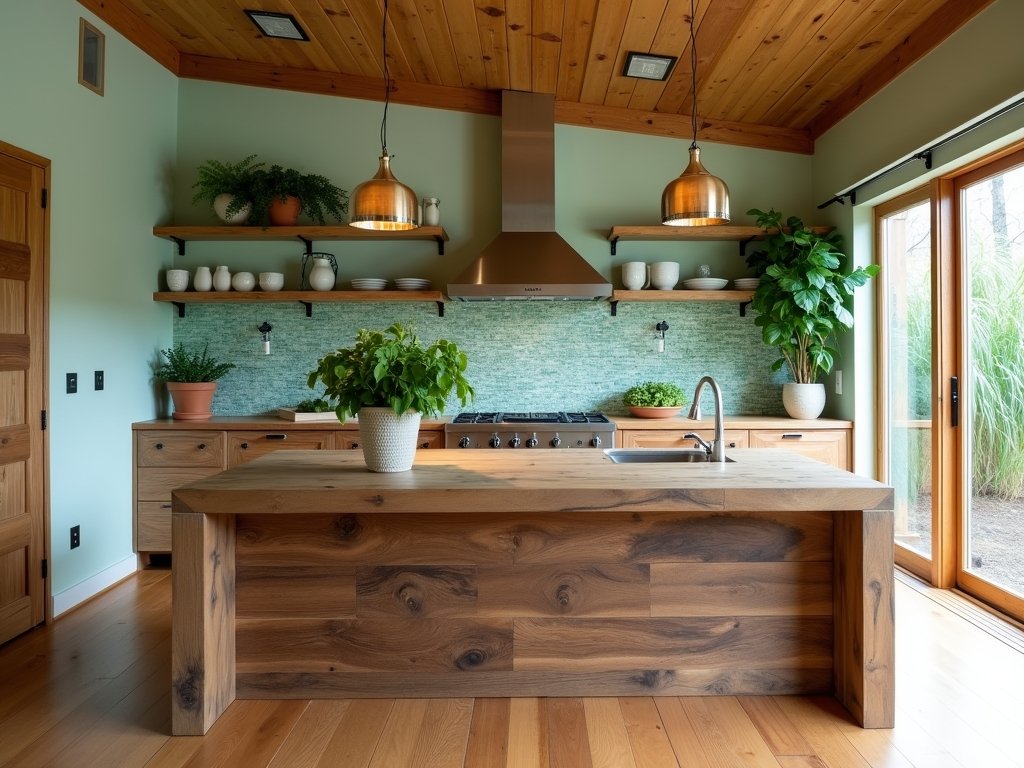
Give old materials new life with recycled glass countertops or reclaimed barnwood islands. Glass counters, speckled with bits of blue and green, mimic ocean depths, while salvaged wood adds rustic character. Even small swaps matter: Try cabinet handles made from recycled metal or a backsplash crafted from broken pottery tiles. For flooring, consider bamboo—a rapid-renewable resource that’s harder than oak and just as stylish. Dive deeper into eco-friendly kitchen materials for clever ideas that tread lightly on the planet.
5.2.3 Energy-Efficient Appliances
Energy Star-rated appliances are a win-win: They slash utility bills and reduce your carbon footprint. Look for refrigerators with humidity-controlled crispers (bye-bye, wilted herbs) or dishwashers with soil sensors that use less water. Pair with LED under-cabinet lighting for task areas and solar-powered outdoor string lights for evening ambiance. Every watt saved means more cash for beach-inspired decor—or that dreamy weekend getaway!
5.3 FAQs
- What colors are best for a coastal kitchen?
Stick to soft blues, whites, and sandy neutrals for a serene base. Add pops of navy or seafoam green for depth. Avoid overly bright hues—they can clash with the natural vibe. - How to add nautical decor without overdoing it?
Less is more! Try rope drawer pulls, a single vintage oar on the wall, or a bowl of sea glass on the counter. Skip anchor-shaped everything. - Best materials for humid coastal climates?
Opt for moisture-resistant quartz, stainless steel, or teak. Avoid untreated wood or porous stones like marble, which can warp or stain. - How to balance modern and coastal styles?
Mix sleek elements (think handleless cabinets or concrete countertops) with natural textures like jute rugs or driftwood art. Keep the palette neutral to bridge the gap. - Affordable coastal kitchen upgrades?
Paint cabinets white, swap hardware for brass or rope accents, or DIY driftwood shelves. Add woven baskets for storage and swap out lighting fixtures for wicker pendants.