15 Living Room Lighting Formula: Secrets to Avoid Shadows
15 Living Room Lighting Formula with pro lighting secrets! Discover how to layer light, choose bulbs, and banish dark corners. DIY-friendly tips
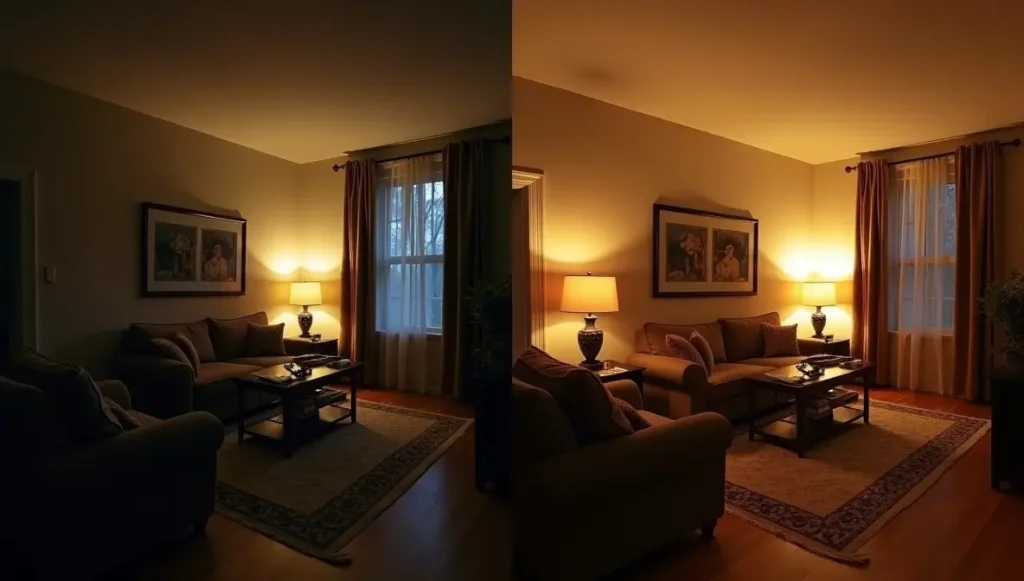
Table of Contents
Table of Contents
Living Room Lighting Formula
Picture this: You’ve spent weeks picking the perfect sofa, agonized over paint swatches, and curated art that screams “you.” Yet when evening falls, your living room feels less inviting sanctuary and more…dull interrogation chamber. Sound familiar? You’re not alone—68% of homeowners botch their lighting, leaving spaces lifeless or glaring.
Lighting isn’t just functional; it’s emotional alchemy. Get it right, and suddenly movie nights feel cozier, conversations flow smoother, and that pricey abstract painting? It pops like gallery art. But here’s the kicker: most folks rely on a single overhead fixture (yikes!), turning rooms into shadowy caves or sterile labs.
Why does lighting make or break your space? For starters, it tiptoes into your subconscious. Warm, layered light can lower stress hormones, while harsh beams sabotage relaxation faster than a spoiler alert. Functionally, it’s a triple-threat hero: ambient glow sets the mood, task lighting saves your eyes during page-turning marathons, and accent beams turn grandma’s vase into a museum piece.
So what’s the fix? Forget complex physics or hiring a designer. The Lighting Formula distills pro secrets into 15 bite-sized, DIY-friendly strategies. We’re diving into color temperature sorcery, fixture scaling hacks, and why dimmers are your new BFF. Whether you’re battling a windowless den or an open-concept labyrinth, these rules transform blunders into brilliance.
Sneak peek of what’s ahead:
- Why layered lighting beats one “big bang” fixture every time
- How to hijack natural light like a sunrise rebel
- Bulb-buying cheats even tech newbies can master
- The $20 trick that banishes “cave effect” forever
Ready to flip the switch? Let’s turn “meh” into magic.
Part 2: Lighting Fundamentals
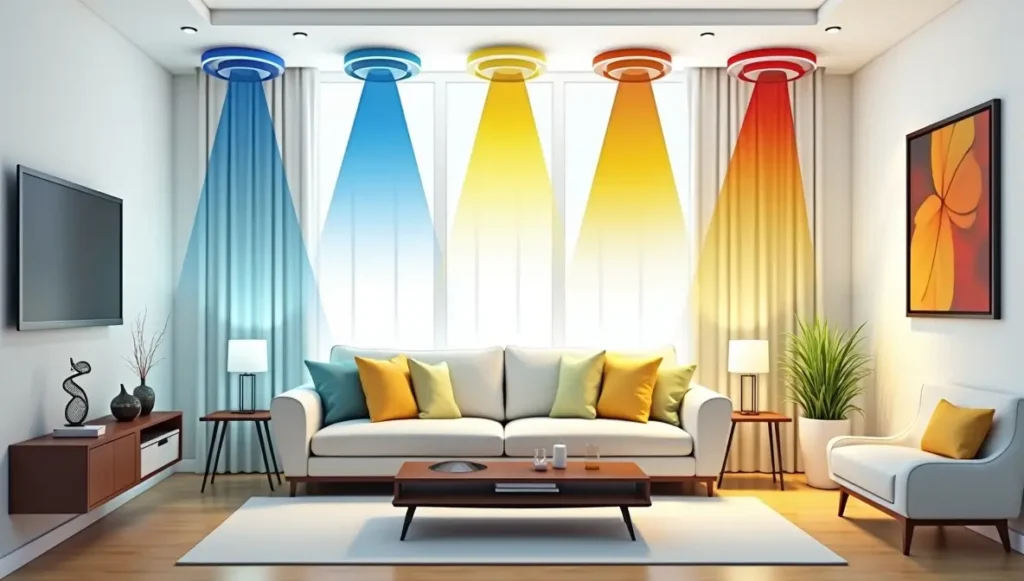
Why Living Room Lighting Matters
Let’s cut to the chase: lighting is the unsung hero of your living room. Get it wrong, and even a million-dollar redesign feels… off. Why? Because light sculpts mood, dictates functionality, and whispers secrets about your space that furniture simply can’t.
The Psychology of Light
Here’s a brain-tickler: your body doesn’t just see light—it feels it. Scientifically speaking, circadian rhythms sync with natural daylight, telling your brain when to feel alert or sleepy. Stick with harsh, cool-toned bulbs at night? Consequently, you’re basically telling your body it’s high noon during Netflix time. Conversely, warm, dimmable lights signal relaxation, lowering cortisol levels like a lullaby for your nervous system. Ever notice why candlelit dinners feel romantic? Exactly.
Meanwhile, lighting also plays Jedi mind tricks on space perception. Strategically placed ambient glow can stretch cramped rooms, while dark corners scream “claustrophobia.” Truthfully? Lighting isn’t decor—it’s behavioral design.
Function vs. Aesthetics
Now, let’s talk practicality versus prettiness. Lighting wears two hats:
- The Taskmaster: Need to read fine print? Knit without stabbing yourself? Task lighting (think adjustable floor lamps or under-shelf LEDs) delivers focused, shadow-free beams where you work.
- The Mood Setter: Hosting a party? Chasing cozy? Ambient layers—soft, diffused glows from ceiling fixtures or wall sconces—wrap the room in atmosphere.
But here’s the kicker: the magic happens when these roles collaborate. A reading nook isn’t just about a bright lamp; it’s about blending task precision with ambient warmth so your eyes don’t feel like they’ve run a marathon.
Common Lighting Mistakes
Before we dive into solutions, let’s spotlight the blunders tripping up 7 in 10 homeowners:
- The Overhead Offender: Relying solely on a central ceiling fixture? Oof. This creates “cave syndrome”—harsh shadows under eyes/chins and a dentist-office vibe.
- Temperature Tug-of-War: Mixing cool and warm bulbs randomly? Suddenly, your room feels like a disco with identity issues.
- Dark Zone Desert: Ignoring corners or key areas (like art or plants)? Congratulations, you’ve built a shadow graveyard.
The 3 Core Layers of Lighting
Think of lighting like an outfit: ambient is your base layer (like a trusty t-shirt), task is your tool belt (functional gear), and accent is the statement necklace (drama!). Nail all three, and your room doesn’t just look good—it works.
Ambient Lighting: Your Foundation
Ambient light is the unsung backbone—the gentle, uniform glow that banishes darkness without assaulting your retinas. Typically, this comes from:
- Ceiling-mounted fixtures (chandeliers, flush mounts)
- Recessed downlights
- Natural light (windows, skylights)
Pro Tip: Aim for 20-30 lumens per square foot. Too bright? You’ll feel like you’re on stage. Too dim? Hello, gloomy crypt.
Task Lighting: Precision Power
Task lighting is your on-demand spotlight. It’s functional, focused, and frankly non-negotiable for activities demanding visual clarity:
- Floor lamps beside armchairs for reading
- Swing-arm sconces flanking sofas
- Under-cabinet LEDs for board games or puzzles
Golden Rule: Position task lights beside you (not behind), so shadows don’t hijack your workspace. Intensity? 300-500 lux for reading.
Accent Lighting: The Drama Queen
This layer is all about flair—highlighting what you love while ignoring what you don’t. Use it to:
- Graze textured walls (brick, stone)
- Spotlight art, sculptures, or bookshelves
- Uplight plants for theatrical silhouettes
Secret Weapon: Accent lights needn’t be bright! In fact, they should be 3x dimmer than ambient light to avoid visual chaos.
Part 3: The 15 Illumination Secrets
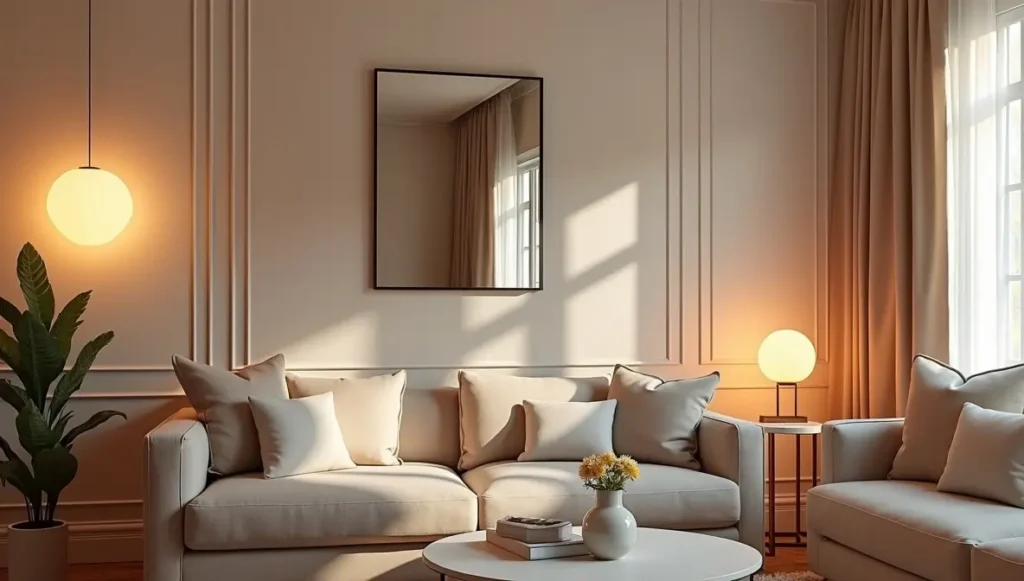
Secret 1: Layer Like a Pro
Let’s get real: single-light setups are like eating plain toast—functional but deeply unsatisfying. The golden rule? Ambient + Task + Accent = Lighting Nirvana.
- Ambient: 50-70% of total light (e.g., dimmable ceiling fixtures).
- Task: 20-30% (e.g., reading lamps near seating).
- Accent: 10-20% (e.g., track lights highlighting art).
Pro Hack: Sketch your room grid. Mark zones (convo area, reading nook, gallery wall), then assign layers. Voilà—instant dimension!
Secret 2: Harness Natural Light
Don’t just rely on sunlight—hijack it! North-facing room? Amp up reflections:
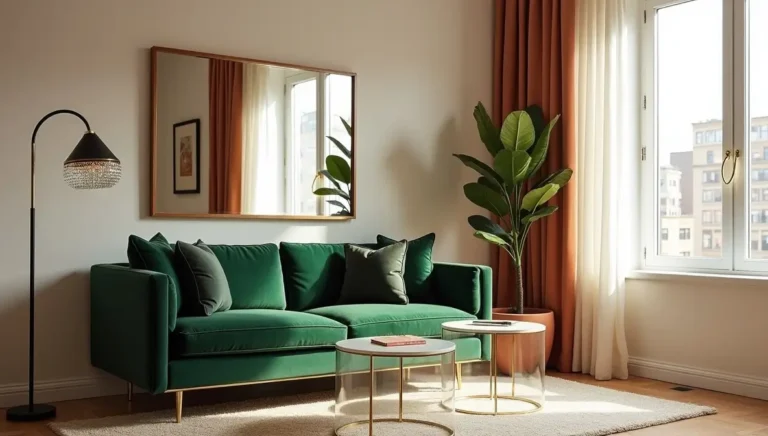
- Place mirrors opposite windows to double daylight.
- Use sheer curtains to diffuse harsh noon glare.
- Choose glossy surfaces (glass coffee tables, metallic decor) to bounce rays into shadows.
Warning: Avoid heavy drapes—they’re light assassins.
Secret 3: Master Color Temperatures
Bulbs aren’t “just bright.” They’ve got personality:
- 2700K-3000K: Warm white (cozy, fireside vibes).
- 3500K-4000K: Neutral white (crisp, functional—ideal for task zones).
- 5000K+: Daylight (sterile, best avoided in living rooms).
Critical Tip: Stick to one temperature per layer! Mixing 2700K ambient with 4000K task lights? That’s a mood whiplash.
Secret 4: Smart Dimmer Systems
Dimmers aren’t luxuries—they’re sanity-savers. Why?
- Lutron Caséta: Reliable, no-hub setup (perfect for technophobes).
- Philips Hue: Color-changing scenes (“Sunset Serenity,” “Midnight Noir”).
Install Trick: Place dimmers at room entries—control ambiance before stepping in.
Secret 5: Statement Fixtures
Your chandelier shouldn’t whisper—it should sing. Nail sizing:
- Diameter = (Room length + width in feet) converted to inches.
(Example: 12’x15’ room → 27″ wide fixture) - Hanging Height: 7’ above floor (or 30-34″ above tables).
Style Hack: Pick one showstopper (e.g., sculptural pendant) + subtle supporting fixtures.
Secret 6: Hidden Light Sources
Light feels magical when you can’t see its origin:
- Cove Lighting: LED strips atop crown molding wash walls with a soft glow.
- Under-Shelf LEDs: Illuminate books/display cabinets sans glare.
- Toekick Lighting: Low-level floor grazing adds cinematic drama.
Budget Alert: Use $15 LED tape lights—self-adhesive and plug-in!
Secret 7: Zone Your Space
Open-concept living room? Divide and conquer with light:
- Pendant Clusters: Hang 3 mini-pendants over the dining nook.
- Floor Lamp Trio: Group near the sofa to define conversation pits.
- Rug Anchors: Place task lamps at corners of area rugs.
Visual Trick: Zones create “rooms within rooms”—no walls needed.
Secret 8: Shadow Play
Shadows aren’t enemies—they’re texture wizards:
- Uplighting: Floor cans aimed upward make ceilings feel taller.
- Downlighting: Recessed spots deepen textures (think brick walls or woven rugs).
Golden Ratio: 30% uplighting, 70% downlighting for balanced depth.
Secret 9: Bulb Selection Cheat Sheet
Not all bulbs are born equal. Your cheat code:
| Bulb Type | Best For | CRI* | Lifespan |
|---|---|---|---|
| LED | Eco-friendly, cool ops | 90+ | 25,000 hrs |
| Halogen | True color accuracy | 100 | 2,000 hrs |
| Incandescent | Vintage fixtures | 100 | 1,000 hrs |
| *Color Rendering Index (CRI): Higher = truer colors | |||
| No-Brainer: For art-heavy rooms, use *Halogen or 90+ CRI LEDs*—they make reds pop and blues glow. |
Secret 10: Scale & Proportion Rules
A tiny chandelier in a vaulted room? Tragic. Avoid “floating fixture syndrome”:
- Low Ceilings (8’) → Flush mounts or semi-flush (max 12″ tall).
- High Ceilings (10’+) → Chandeliers 24-36″ tall.
- Long Rooms → Multiple smaller fixtures (e.g., 3 pendants in a row).
Pro Math: Fixture height = 2.5-3″ per foot of ceiling height.
Secret 11: Reflective Surfaces
Mirrors aren’t just for checking your hair—they’re light multipliers:
- Strategic Placement: Opposite lamps or windows.
- Materials: Glass tables, lacquered furniture, metallic vases.
Caution: Skip opposite clutter (e.g., toy piles). Reflections amplify everything.
Secret 12: Portable Flexibility
Rigid lighting is so 1995. Embrace movable glow:
- Adjustable Floor Lamps: Swing arms for reading → TV mode.
- Plug-in Sconces: No wiring? No problem—use puck lights + decorative shades.
Game-Changer: Battery-powered LEDs inside baskets/planters. Stealth illumination!
Secret 13: Vertical Illumination
Banish “cave face” with wall-loving lights:
- Sconces: Flank sofas at 60-66″ height (eye level when seated).
- Picture Lights: Mounted 6-12″ above art frames.
Rental Hack: Use plug-in sconces—no electrician needed!
Secret 14: Smart Tech Integration
“Hey Google, set romance mode!” Voice-controlled scenes are clutch:
- Movie Night: 10% ambient + accent lights on.
- Dinner Party: 70% ambient + candle-flicker effect.
- Sunrise Simulator: Gradual 2700K → 4000K wake-up.
Starter Kit: Philips Hue White Ambiance bulbs + motion sensors.
Secret 15: Personality Lighting
Rules exist to be bent. Infuse character:
- Edison Bulbs: Exposed filaments for industrial lofts.
- Sculptural Lamps: Stone or ceramic bases as art pieces.
- Colored Bulbs: Temporary teal/pink for parties (just don’t overdo it).
Reminder: Lighting should whisper you—not scream showroom.
Part 4: Implementation Guide
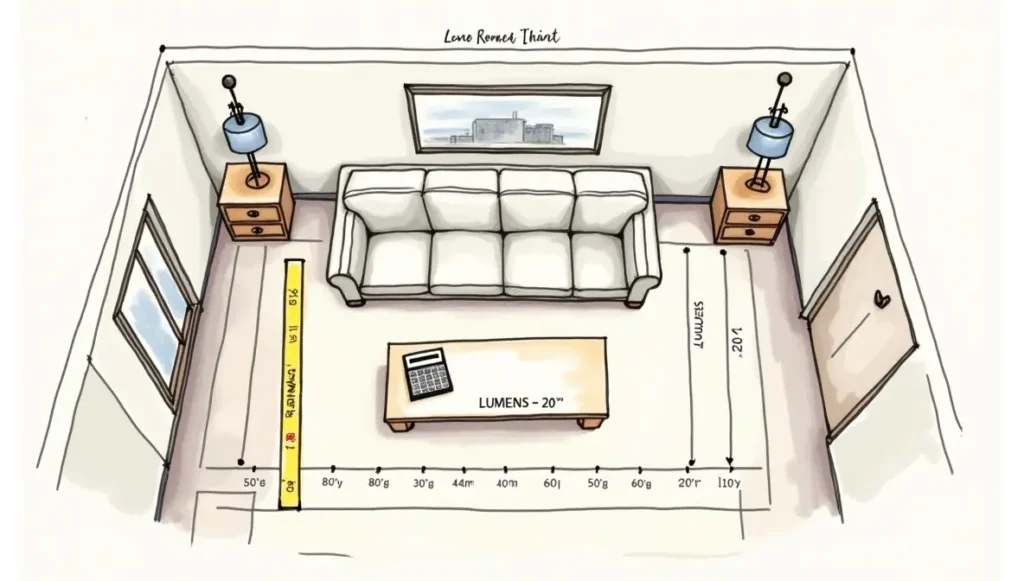
Step-by-Step Lighting Plan
Stop guessing—start transforming. Follow these foolproof steps to design a lighting scheme that’s equal parts functional and fabulous. No electrician degree required!
Step 1: Room Assessment (The “Detective Phase”)
Grab a tape measure and interrogate your space:
- Measure Everything: Room dimensions, ceiling height, window locations.
- Identify Focal Points: Fireplace, artwork, statement furniture.
- Map Activity Zones: Where do you read? Chat? Work?
- Note Obstacles: Columns, low beams, or TV glare spots.
Pro Toolkit: Snap phone pics + sketch a bird’s-eye view grid. Don’t eyeball it—data defeats doubt!
Step 2: Layer Mapping (Your “Lighting Blueprint”)
Time to assign roles using Secret #1 (Ambient/Task/Accent):
- Ambient Layer:
- Mark ceiling fixture locations (e.g., recessed lights every 4-6 ft).
- Calculate total lumens: *Room sq ft × 20 = minimum lumens needed*.
- Task Layer:
- Place icons where focused light is critical (e.g., beside armchairs, above desks).
- Accent Layer:
- Star ⭐ art, plants, or architectural details needing drama.
Rental Hack: Use plug-in fixtures for all layers—zero permanent changes!
- Star ⭐ art, plants, or architectural details needing drama.
Step 3: Fixture Selection (The “Matchmaking Game”)
Now, marry your blueprint to real-world fixtures:
| Layer | Budget-Friendly | Splurge-Worthy |
|---|---|---|
| Ambient | Flush-mount LED semi-flush | Smart dimmable chandelier |
| Task | Adjustable floor lamp | Swing-arm wall sconce |
| Accent | Plug-in picture light | Tunable track lighting |
Crucial Checks:
- Bulb Compatibility: Ensure fixtures match bulb bases (E26 vs GU10).
- Dimmer Readiness: Verify fixtures are dimmable (non-dimmable LEDs buzz!).
- Scale Test: Hold cardboard cutouts at planned heights—avoid regret later.
Step 4: Installation Checklist (The “Grand Finale”)
Before drilling a single hole, run this safety + style checklist:
- Heights:
- Pendants: 30-34″ above tables | 7’ above floors
- Sconces: 60-66″ from floor (seated eye level)
- Spacing:
- Recessed lights: Divide ceiling height by 2 for foot spacing (e.g., 8’ ceiling → lights 4’ apart).
- Multiple pendants: 30″ apart minimum.
- Wire Management:
- Use cord covers or raceways for plug-in fixtures.
- Hide floor lamp cords under rugs (gaffer tape is your friend!).
- Final Test:
- Turn on ALL layers at night. Walk the room—hunt dark spots or glare bombs.
💡 “Lighting isn’t done until it makes your morning coffee ritual feel like a sacred ceremony.”
Part 5: Mistakes & Fixes
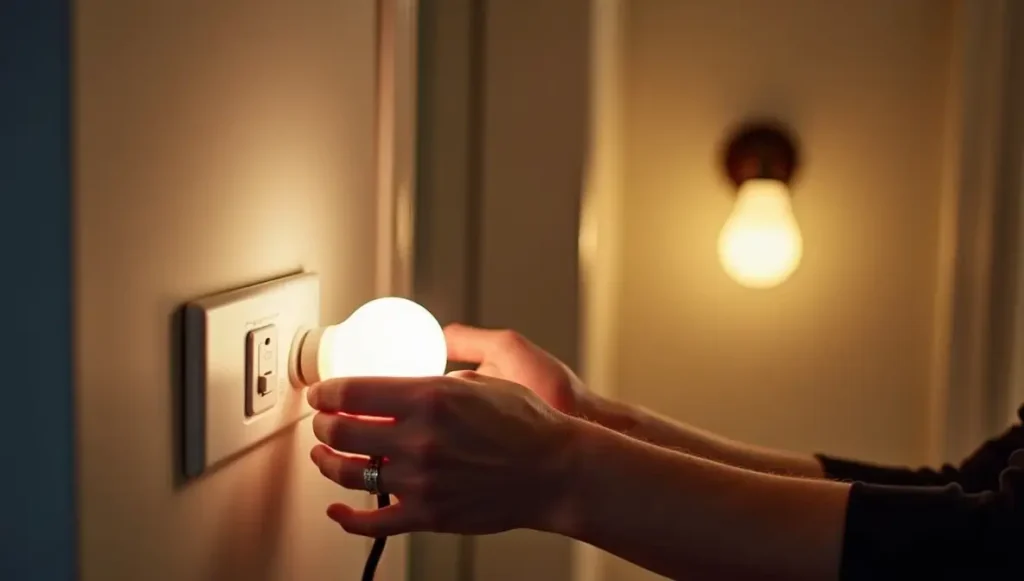
Top 5 Lighting Blunders (and Solutions)
Let’s face it: lighting fails happen to the best of us. But why settle for “meh” when instant upgrades exist? Here’s your cheat sheet for dodging disasters.
Blunder 1: The Single Overhead Light Trap
Why it flops: One central fixture creates harsh shadows, uneven illumination, and that dreaded “operating room” vibe. Faces look ghastly, and corners vanish into gloom.
✅ Fix: Layer, layer, layer! Add 3+ light sources ASAP:
- Swap the overhead for a dimmable semi-flush mount
- Flank the sofa with two floor lamps (35W LED each)
- Tuck plug-in wall sconces beside artwork
Pro Tip: Triangle your lights—corners and mid-walls beat clustered beams!
Blunder 2: Temperature Tango (Chaos Edition)
Why it flops: Mixing 2700K and 5000K bulbs in one room? That’s like pairing opera with death metal—visually jarring and biologically confusing.
✅ Fix: Stick to 2700K-3000K everywhere! Check packaging before buying. Already own clashing bulbs? Donate cold ones to the garage. Bonus: Use smart bulbs (like Philips Hue) to unify temperatures remotely.
Blunder 3: Dimmer Desert
Why it flops: Static brightness murders ambiance. Movie night? You’re either squinting or stumbling in the dark.
✅ Fix: Install smart dimmers in under 30 minutes:
- Turn off circuit breaker (non-negotiable!)
- Swap existing switch with Lutron Caséta ($55)
- Pair with dimmable LED bulbs (look for “dimmable” on box)
Game-Changer: Set “scenes”—70% for dinners, 20% for Netflix.
Blunder 4: Scale Slip-Ups
Why it flops: A dinky chandelier in a vaulted room screams “afterthought,” while an oversized fixture overwhelms.
✅ Fix: Do the math! For pendants/chandeliers:
- Diameter = (Room length + width in feet) → inches
- Height = 2.5-3″ per ceiling foot
Too late? Swap colossal fixtures for cluster mini-pendants (3x small > 1x massive).
Blunder 5: Accent Light Amnesia
Why it flops: Ignoring walls and corners creates “floating furniture syndrome”—your room feels untethered and flat.
✅ Fix: Embrace vertical glow:
- Add $25 plug-in sconces at 60″ height beside shelves
- Use LED tape lights under cabinets/toekicks
- Uplight one statement plant with a 10W spotlight
Magic Trick: Accent lights should be 3x dimmer than ambient—think moonlight, not stadium glare.
💡 “Fixing lighting blunders isn’t about perfection—it’s about progress. One swapped bulb can shift a room’s soul.”
Part 6: FAQs
Frequently Asked Questions
Got burning lighting questions? We’ve got answers. Here’s the real talk on living room illumination—no jargon, just actionable truths.
Q1: How many light sources should a living room have?
A: Think layers, not numbers! Aim for 5-7 sources minimum:
- 1-2 ambient (e.g., ceiling fixture + natural light)
- 2-3 task (floor/table lamps in activity zones)
- 2 accent (sconces, track lights)
Small room? Scale down—but never fewer than 3.
Q2: What’s the ideal height for pendant lights?
A: Depends on context:
- Over coffee/dining tables: 30-34″ above surface
- General ceiling hang: 7+ feet above floor (no head-bonking!)
- Hallways/entries: 6.5-7 feet clearance
Pro hack: Use painter’s tape to mock heights before drilling!
Q3: Can I mix metal finishes in fixtures?
A: Absolutely—if you balance deliberately:
- Pair warm + cool: Brass (warm) with chrome (cool)
- Repeat finishes: Use same metal in 2+ places (e.g., brass in chandelier and lamp base)
- Avoid chaos: Max 2-3 finishes per room.
Q4: How do I brighten a room without overhead wiring?
A: Go plug-in guerrilla mode:
- Floor lamps: Arc styles flood ceilings with bounce light
- Plug-in sconces: Use cord covers for “built-in” illusion
- LED tape lights: Hide under shelves/sofas (battery-powered!)
Rental holy grail: No wires, no holes, all glow.
Q5: Are LED bulbs worth the cost?
A: 100% yes—here’s why:
| Metric | LED | Incandescent |
|---|---|---|
| Lifespan | 25,000+ hours | 1,000 hours |
| Energy Use | 8-10 watts | 60 watts |
| Annual Cost | $1.20 | $7.20 |
| Plus: No heat emission, instant full brightness, and dimmable options. Ditch the dinosaur bulbs! |
Q6: Why do my dimmable LEDs buzz or flicker?
A: Usually a mismatched dimmer. Fixes:
- Use bulbs/dimmers from same brand (e.g., Lutron switch + Cree bulb)
- Check packaging for “dimmable” labels
- Swap magnetic low-voltage dimmers for LED-compatible trailing-edge dimmers
Still buzzing? Contact the manufacturer—many offer free replacements!
Part 7: Conclusion
Your Illuminated Oasis Awaits
Let’s cut to the chase: lighting isn’t rocket science—it’s emotional alchemy. Whether you’re battling a windowless cave or an awkward open-concept space, The Lighting Formula hands you the blueprint. Forget cookie-cutter solutions; you’ve now got 15 secrets to bend light to your will.
Remember the heavy hitters:
- Layer religiously (ambient + task + accent = harmony)
- Command temperatures like a pro (*2700K-3000K is your sweet spot*)
- Let dimmers and smart tech do the heavy lifting (goodbye, static glare!)
You don’t need a designer or a fat budget. That $20 plug-in sconce? Those LED strips under your shelves? Pure magic. They prove lighting’s power lies in subtlety—not spectacle.
💡 “The perfect living room isn’t lit—it’s composed. Like a symphony of shadows and highlights playing in your personal sanctuary.”
So what’s next? Start small:
- Swap one harsh bulb for warm dimmable LED tonight.
- Tape $1 store mirrors opposite a window tomorrow.
- Command Alexa to “set romance mode” by Friday.
Notice how moods lift. Watch colors deepen. Feel spaces breathe.
Your living room’s been waiting for this glow-up. No more shadows. No more squinting. Just you, in a space that finally—brilliantly—feels like home.
Flip the switch. Your masterpiece starts now.